A zirconia crown can be an excellent repair for one tooth and an unnecessarily aggressive choice for another. By comparing the damage, remaining tooth structure, bite, appearance needs and alternatives, you can arrive at a zirconia crown consultation in Delhi with specific questions and a clearer decision.
Key takeaways
- Choose zirconia for heavily damaged molars, premolars or root canal-treated teeth needing full coverage.
- Use a filling or onlay when enough healthy tooth remains for conservative repair.
- Ask about tooth preparation, crown thickness, material, bite, shade and laboratory quality.
- Confirm whether the tooth is restorable before comparing zirconia crowns with an implant.
Which teeth are good candidates for a zirconia crown?
A molar or premolar that carries heavy chewing forces is often a good candidate for zirconia, especially when a large filling has weakened its cusps. A root canal-treated tooth with substantial loss of coronal structure may also need full coverage to reduce fracture risk.
| Tooth situation | Why zirconia may fit | Critical condition |
|---|---|---|
| Molar or premolar | Handles substantial chewing load | Adequate clearance and sound supporting tooth structure |
| Root canal-treated tooth | Protects a weakened crown after treatment | A restorable root and enough structure for a ferrule |
| Cracked tooth | Splints a crack that remains restorable | The crack must not extend into the root |
| Large filling with weak cusps | Covers cusps that may split under pressure | Decay and pulp problems must be treated first |
Front teeth require a separate aesthetic decision. Translucent zirconia or a porcelain-layered design can provide more natural light transmission, while stronger, more opaque zirconia can mask a dark root-treated tooth. The opaque option may look less lifelike, and shade matching depends on the stump colour, cement, thickness and lighting.
A crown is unsuitable when the tooth is broken below the gumline, deeply decayed, supported by unhealthy periodontal tissue, or affected by an unfavourable root fracture. Extraction followed by an implant-supported crown may then be safer than a zirconia crown for damaged tooth.
Bruxism, clenching, a deep bite or limited clearance raises mechanical risk; high-strength monolithic zirconia, bite adjustment and a night guard may be needed.
When is a filling, onlay, veneer, root canal or implant better?
Full coverage is not necessary for every damaged tooth; preserving sound enamel is preferable when a smaller treatment will remain reliable.
| Option | What it preserves or treats | When it applies |
|---|---|---|
| Direct composite filling | Replaces lost tooth structure with minimal preparation | Small or moderate defects without weakened cusps |
| Inlay | Fits a contained cavity between the cusps | The cusps remain sound and do not need coverage |
| Onlay | Covers one or more cusps | A cusp needs protection while much of the tooth remains strong |
| Veneer | Covers the visible front surface | Cosmetic change on a structurally sound front tooth, not a tooth weakened by deep decay or cracks |
| Monitoring | Avoids immediate restoration | A superficial crack causes no pain, biting sensitivity or other symptoms |
| Root canal treatment | Removes inflamed or infected pulp | Pulp inflammation or infection is diagnosed before restoration |
| Implant-supported crown | Replaces a missing tooth | Extraction is necessary because predictable restoration is not possible |
Active decay, pulp inflammation or infection must be diagnosed and treated before crown placement. A crown does not replace root canal treatment.
After root canal treatment, a post only retains a core when too little coronal tooth structure remains. It does not strengthen the root, and placing one requires dentin removal that can increase fracture risk.
Every full-coverage crown requires irreversible tooth reduction. The decision should reflect sound enamel, defect size, crack depth, symptoms and long-term prognosis—not zirconia’s strength alone.
How do zirconia options compare with other crowns and natural tooth structure?
A heavily loaded molar or a patient who clenches or grinds often needs high-strength monolithic zirconia, milled as one piece with fewer porcelain-veneer chipping concerns. A visible front tooth may justify a layered or higher-translucency design, accepting greater mechanical risk for better characterization.
| Option | Main advantage | Main limitation or best use |
|---|---|---|
| Monolithic zirconia | Strong, one-piece restoration; high-strength 3Y-TZP suits heavy load | Less lifelike than translucent types; polish any adjusted surface |
| Layered zirconia | Porcelain characterization can improve a smile-zone tooth | The porcelain veneer can chip |
| Multilayer or higher-translucency zirconia | More natural depth and shade transition than older opaque zirconia | Generally lower strength and fracture toughness than high-strength 3Y-TZP |
| Porcelain-fused-to-metal | Proven strength and masking ability | A darker margin or metal influence can show |
| Lithium disilicate or other glass ceramic | Strong translucency and useful adhesive-bonding options | Requires careful thickness, bonding and occlusal control |
| Composite | Preserves more tooth structure | Less suitable for major chewing loads |
| Natural tooth structure | Best integration of dentin, enamel and proprioception | No crown fully replicates it |
The choice also depends on limited clearance, how much tooth reduction is safe, and whether the stump, cement or lighting changes the final shade. A rough, unpolished zirconia adjustment can wear the opposing tooth or feel high, so polish it according to the material system.
For zirconia crown options in Delhi, ask which design matches your bite rather than choosing the most translucent crown automatically.
What do zirconia crown size options and treatment stages involve?
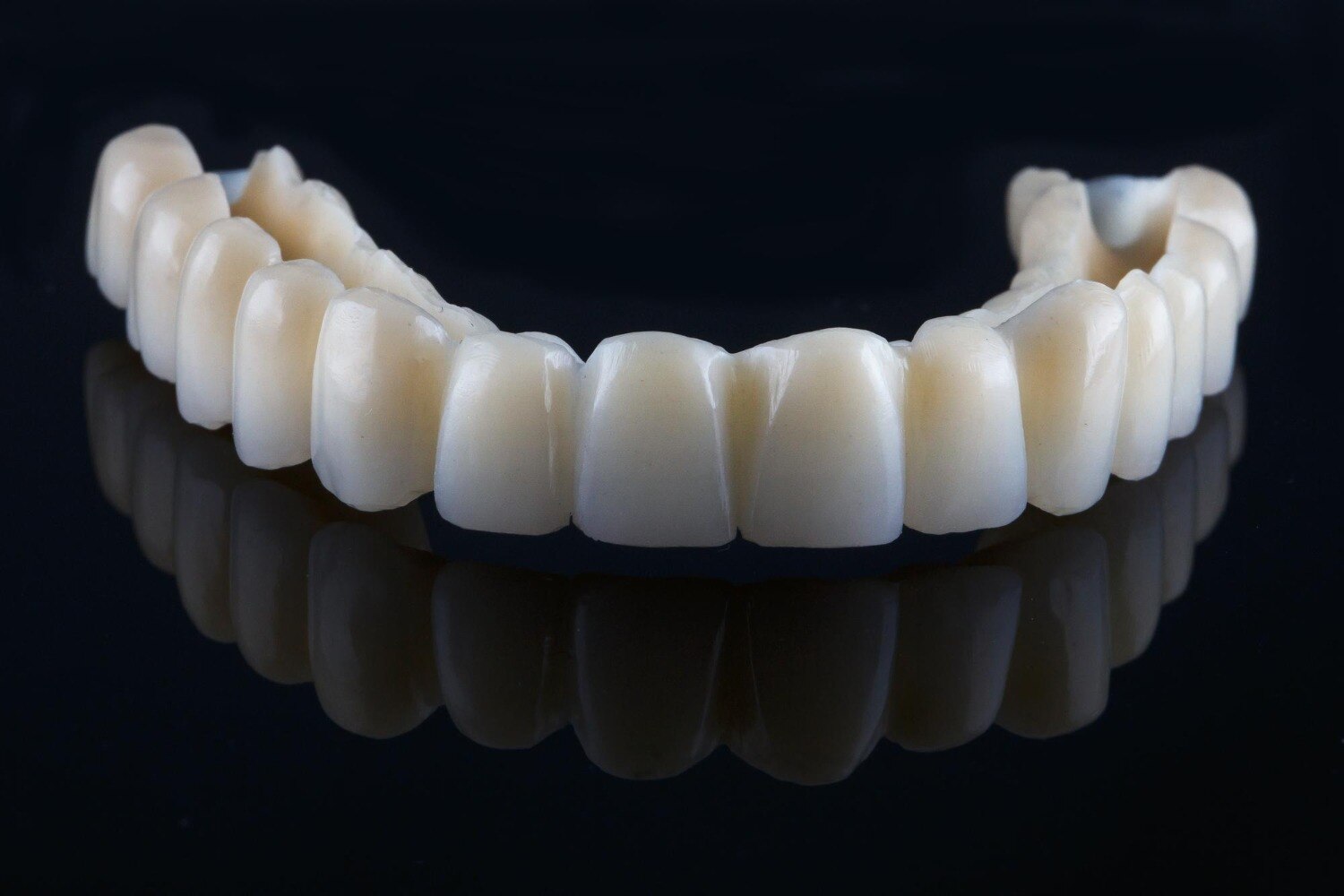
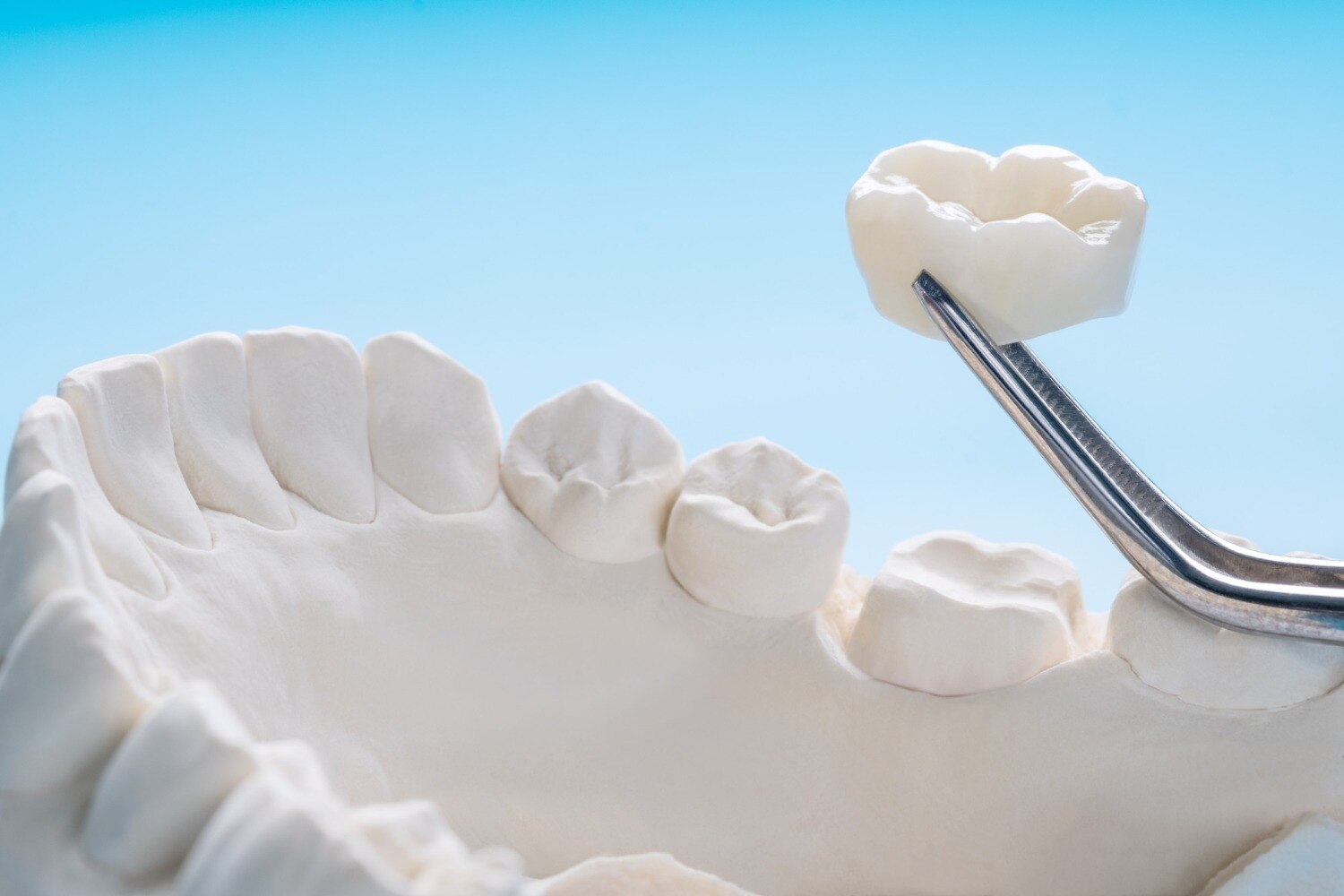
Zirconia crown size options are not retail small, medium and large selections. CAD/CAM software designs one crown for one tooth, controlling contours through neighbouring contacts, the opposing tooth, gumline, available restorative space, occlusal clearance and the laboratory’s anatomy design. A dentist cannot safely make it arbitrarily thin or bulky.
Preparation must remove enough tooth structure for the selected zirconia system’s wall and connector requirements. Too little reduction creates an over-contoured crown or inadequate material; too much sacrifices dentin. There is no universal thickness because zirconia generations and manufacturers specify different designs.
The usual treatment sequence is:
- Examination and radiographs when indicated
- Diagnosis and tooth preparation
- Impression or digital scan
- Temporary crown when needed
- Laboratory manufacture
- Try-in, contact and bite checks
- Cementation and final polishing
Appointment count and stage length change with root canal treatment, gum therapy, laboratory workflow and required alterations. Request a written schedule rather than assuming a fixed timeline.
| Stage | What is checked | Why it matters |
|---|---|---|
| Planning | Diagnosis, roots, gums and restorative space | Prevents treating the wrong problem |
| Try-in | Contacts, margins and occlusion | Identifies pressure or food-trapping points |
| Finishing | Cementation and polishing | Reduces discomfort and opposing-tooth wear |
Cement selection differs from glass ceramics. Zirconia is not treated internally with hydrofluoric acid alone; bonding may require air abrasion and an MDP-containing primer or resin cement. Semi-permanent or self-adhesive cement may suit a retentive preparation.
What should you ask during a zirconia crown consultation in Delhi?
For a zirconia crown consultation in Delhi, take a written decision checklist rather than choosing from the word “zirconia” alone. Ask the dentist:
- What is the diagnosis, and how much sound tooth remains? Ask about crack depth, decay location, pulp and root condition, periodontal support, radiographic findings, ferrule, bite forces and the quality of any existing root canal.
- Which system is planned: high-strength 3Y-TZP, multilayer zirconia or higher-translucency zirconia? Will the crown be monolithic or porcelain-layered?
- What preparation is required, and how will the temporary crown, cement and laboratory design be managed? Ask for shade selection before tooth dehydration, using the planned material and thickness.
- How will the laboratory check contacts and occlusion? Confirm that adjusted zirconia will be polished, and ask whether clenching or bruxism makes a night guard necessary.
- What is the plan if the crown chips, debonds or the tooth develops pain?
| Material | Main trade-off | Question to resolve |
|---|---|---|
| High-strength 3Y-TZP | Stronger, less translucent | Does the tooth carry heavy load? |
| Multilayer or translucent zirconia | Better colour depth, lower strength than high-strength grades | Will the stump show through? |
| Porcelain-layered zirconia | More characterisation, added veneer-chipping risk | Is the visible-zone benefit worth it? |
Zirconia crowns in Delhi should be compared on diagnosis, material selection, laboratory communication and follow-up. At AK Dental Superspeciality Clinic on CGHS ECHS CBSE, use the consultation to test whether zirconia is preferable to an onlay, another crown design or extraction and replacement for that specific tooth.
Related service
Zirconia Crowns At AK Dental Multispeciality Clinic, we offer Zirconia Crowns to restore damaged, weakened, discolored, or root canal-treated teeth while providing a... View service → |
Frequently asked questions
Which teeth are good candidates for a zirconia crown?
Molars and premolars exposed to heavy chewing forces are common candidates when large fillings have weakened the cusps. A root canal-treated tooth with substantial coronal structure loss may also need full coverage.
When is a filling, onlay, veneer, root canal or implant better than zirconia?
A filling suits smaller defects, while an onlay preserves more tooth when cusps need protection. A veneer suits suitable front-tooth enamel and cosmetic changes. Root canal treatment is needed when the pulp is infected or irreversibly inflamed. An implant replaces a tooth that cannot be predictably restored.
How do zirconia crowns compare with other crowns and natural tooth structure?
Zirconia offers a tooth-coloured full-coverage option with high strength, especially for posterior teeth. A crown still requires removal of healthy tooth structure and does not behave exactly like natural enamel, so conservative restorations are preferable when they provide adequate protection.
What should you ask during a zirconia crown consultation in Delhi?
Ask whether the tooth is restorable, how much structure will be prepared, which zirconia type is proposed, how the bite and shade will be checked, what temporary protection is planned, and how many visits the treatment requires.
Keywords